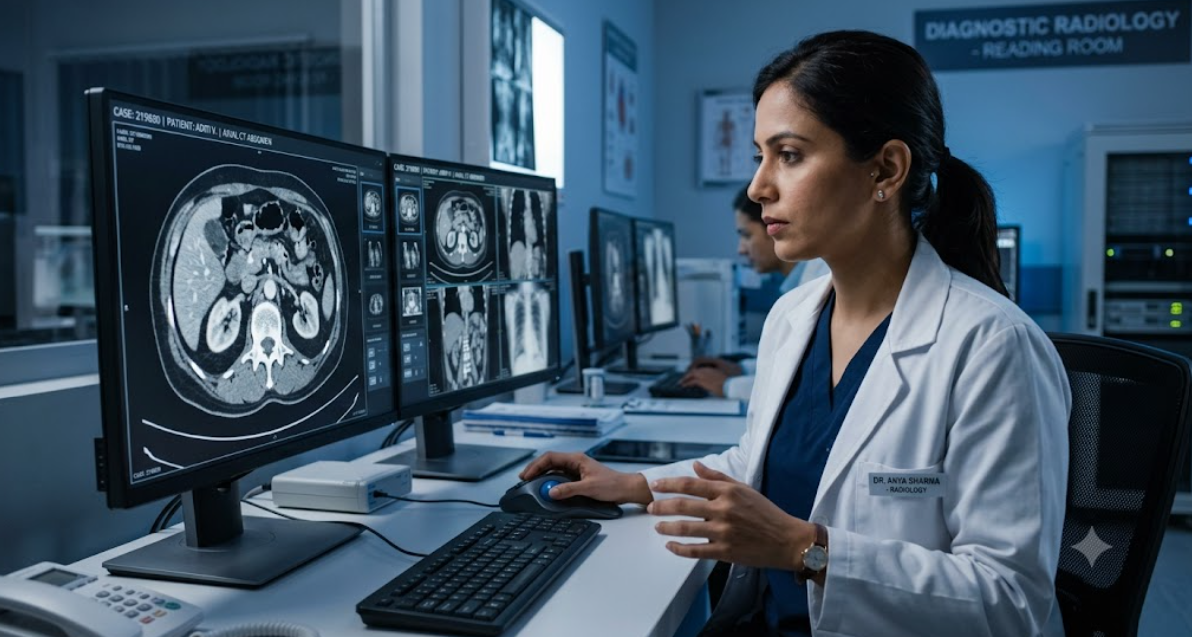
Diagnostic imaging helps doctors look inside the body without relying on symptoms alone. X-rays, ultrasound, CT, MRI, plus other imaging techniques can provide information about bones, organs, soft tissues, blood vessels, plus disease processes.
For patients seeking Radiology services in Pune, understanding why a particular scan has been recommended can make the diagnostic process easier to navigate.
Different Imaging Tests Serve Different Purposes
There is no single scan that is best for every medical problem.
An X-ray can be useful for many bone, chest, plus joint-related assessments.
Ultrasound uses sound waves to evaluate various soft tissues plus organs. It is commonly used in abdominal, pelvic, obstetric, plus other clinical assessments.
CT provides cross-sectional images that can be valuable in trauma, chest conditions, abdominal problems, kidney stones, plus several other situations.
MRI provides detailed soft-tissue information plus is frequently used for neurological, spinal, joint, plus selected organ assessments.
The treating clinician selects imaging according to the clinical question.
Preparation Instructions Matter
Some scans require little preparation. Others may require fasting, a full bladder, removal of metal objects, or administration of contrast material.
Patients should follow the instructions provided by the imaging facility.
Before certain scans, staff may need information about
- Pregnancy possibility
- Kidney problems
- Previous contrast reactions
- Implanted medical devices
- Metal implants
- Claustrophobia
- Current medical conditions
Providing accurate information supports safer imaging.
Contrast Is Not Required for Every Scan
Contrast agents can improve visualization during selected CT or MRI examinations.
Whether contrast is required depends on the clinical purpose of the scan.
Patients with certain medical conditions may require additional assessment before contrast administration.
Previous reactions should always be reported.
Why Previous Imaging Can Be Useful
When available, patients should bring earlier scans plus reports.
Comparing current images with previous studies can help clinicians assess whether a finding is new, stable, improving, or progressing.
This can be particularly useful during follow-up of known conditions.
The Report Needs Clinical Interpretation
A radiology report describes imaging findings, yet it should be considered alongside symptoms, examination findings, laboratory tests, plus medical history.
An imaging finding does not always explain a patient's symptoms.
Similarly, a report containing unfamiliar medical terminology should not automatically cause alarm.
The doctor who requested the scan can interpret its relevance within the broader clinical picture.
Choose Imaging Based on Clinical Need
Patients sometimes request a particular scan because someone with similar symptoms received it. This approach may not be appropriate.
For example, back pain does not automatically require an MRI. Headache does not automatically require brain imaging.
Clinical assessment helps determine whether imaging is necessary plus which modality is most informative.
Hospital-Based Radiology Can Support Coordinated Care
Diagnostic imaging often plays a central role across Orthopedics, General Surgery, Neurology, Urology, General Medicine, plus numerous other specialties.
Hinjawadi SuperSpeciality Hospital provides Radiology support within its multispeciality healthcare setting in Pune, allowing imaging findings to contribute to broader clinical evaluation when required.
Patients should understand the reason for the test, preparation requirements, plus how results will be reviewed.
Radiology is most useful when imaging answers a clear clinical question. Appropriate test selection plus interpretation in the context of the patient's complete health picture can support more informed diagnosis plus treatment planning.
Keywords